A short drive through Tahoma National Cemetery makes clear that the grounds are entering a new chapter of stewardship. Across the landscape, improvements are reshaping both the appearance and daily function of this hallowed place. The Public Information Center and committal shelters have been re-roofed and modernized. Road curbs have been replaced, and new water spigots now line the lanes. New facilities are rising while familiar ones are being expanded and renewed. Among the additions are a dedicated Veterans Service Organization building to support Honor Guard teams, a greatly enlarged administrative building, a new maintenance facility, and new public restrooms. Updated signage, floral stations, repaired caulking, memorial walls, and material storage stalls further reflect the care and long-term investment being devoted to the cemetery.
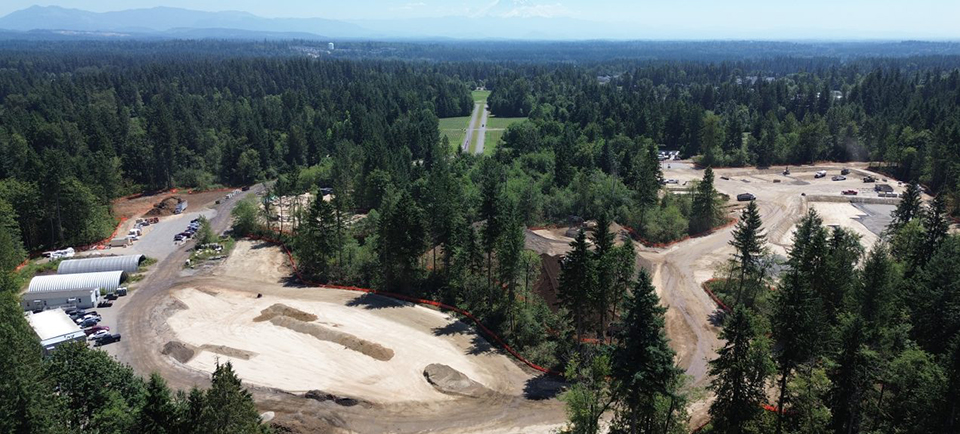
The most dramatic transformation is unfolding in the cemetery’s northwest quadrant, where a substantial portion of the landscape has become an active construction zone. Phase 3 encompasses approximately 43 acres of largely undeveloped woodland, terrain defined by rolling topography and several small wetlands that have long bordered the cemetery’s quiet edges. According to Brian Combs, Administrative Officer at Tahoma National Cemetery, the expansion includes construction of a new loop road and ten new interment sections totaling approximately 15 acres. When completed, these sections will provide 28,914 additional gravesites, including pre-placed crypt fields for traditional in-ground casket burials, a green burial area, and columbaria for above-ground interment of cremated remains.
Scheduled for completion in July 2027, the $80 million expansion will ensure that Tahoma National Cemetery can continue serving veterans and their families for approximately 35 more years, extending its capacity through 2060. Yet the undertaking represents far more than an investment in infrastructure. It is a reaffirmation of the nation’s enduring promise: that those who served—and the families entrusted with preserving their stories—will always have a place of honor in the Cascade foothills. For generations to come, these newly prepared acres will stand as a lasting testament to service, sacrifice, and the quiet dignity of remembrance. Photo courtesy of Goodfellow Bros. Submitted by Cary Collins.