Among the nationalities immigrating to the United States during the 1800s, none were more associated with coal mining than the Welsh. By 1870, British immigrants, chiefly from Wales, accounted for more than 60% of all foreign-born miners in America. The Welsh miners were naturally inclined, bringing skills they had already perfected in Wales, then a global leader in coal and iron production. By 1900, more than half of the 100,000 Welsh-born residents lived in Pennsylvania, Ohio, and New York, where they were concentrated in coal mining, metallurgy, and slate quarrying.
The life of Joshua A. Morris is just one of many Welsh success stories. His father, David Morris, was born in Ebbe Vale, Monmouthshire, Wales, in 1830. Seven years later, in nearby Tredegar, his mother, Mary Harris, an orphan, was born. Tredegar was famous for its ironworks developed in 1797. The Morris and Harris families separately emigrated in the 1840s. David and Mary first met in Hickory Corner, Pennsylvania, an area in the anthracite coal belt. They married there in 1854.
The family moved among the coal-mining areas of Pennsylvania, Ohio, and Iowa, where all ten children were born. Joshua Morris was their first, born in 1856 in Mahoning County, Ohio, where coal mining and iron blast furnaces dominated the economy. Coal and coke are critical inputs for the production of iron ore and steel.
Joshua’s father, David Morris, was often on the move. In the 1850s, he traveled to California with three friends, pushing a two-wheeled cart loaded with their outfit. In 1876, David boarded a westbound Northern Pacific train to the Washington Territory, looking for opportunities. He returned two years later and purchased 150 acres of natural prairie, becoming the first landowner in the area that would later be known as Buckley.
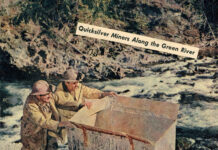
Josh Morris joined his father out West in 1879. He found work at a Renton coal mine before traveling to California. There, he joined Victor Tull’s prospecting party that traveled to Washington and discovered high-quality coal deposits along the Green River in July 1880. That discovery led to the development of Black Diamond’s coal mines. By 1882, Joshua was back in Renton, joined by his younger brother, David, and a sister, Mary Ellen.
Joshua married Izella Snow at the Snow family’s Renton home on July 31, 1884. The wedding ceremony was performed by George Whitworth, an English-born Presbyterian missionary from Indiana who moved west in 1853. From his boyhood in England, Whitworth was fascinated by the Pacific Northwest, drawing inspiration from accounts of the Hudson Bay Company. In addition to his church work, Whitworth was instrumental in the development of coal mines in Newcastle, South Prairie, Renton, and Wilkeson. He later founded Whitworth College.
Josh and Izella Morris moved to Franklin, east of Black Diamond, in the mid-1880s. Their first daughter, Lena, was born there in 1887, followed by Nina Marie in 1890. Franklin was rocked by violence in late June 1891, when Black coal miners, recruited from the Midwest as strikebreakers, clashed with White miners who, through their Knights of Labor union, sought better wages and working conditions. The Franklin riot left two men dead, and two women seriously wounded before peace was restored. Franklin’s mines were often mismanaged, leading to an August 1894 fire where 37 miners perished from smoke and suffocation after the mine’s ventilation fan was turned off.
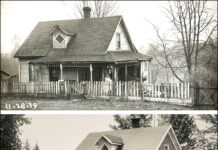
Joshua and Izella left Franklin after the 1891 riots and found a 40-acre farm in Osceola, two miles west of Enumclaw. They purchased the property for $125, paid in gold. They also bought a lot in Renton. In Osceola, two more daughters were born to the Morris family: Ruth in 1892 and Lucile in 1896.
Next week’s column will feature more about the Joshua & Izella Morris family and the Osceola home they built. This circa 1884 photo comes courtesy of two granddaughters, Betty Falk and Pauline Kombol. Its paper frame was playfully inscribed, ‘The Lotus-Eater.’ The image was colorized by Boomer Burnham, a Tahoma High School photography instructor.