The modern tourism industry emerged in the early decades of the 20th century. It was amplified by the widespread adoption of the 40-hour workweek. With a typical five-day workweek of 8-hour days, ordinary Americans gained weekends stretching from Friday night to Sunday, custom-made for leisure activities.
Americans took to the roads with affordable automobiles like Henry Ford’s cheap and simple Model T. Soon, the Chevrolet 490, named for its $490 price tag, was competing against Ford’s dominance, as were cars by Overland, Studebaker, and Maxwell.
Automobiles created a freedom that railroads, their main competitors, lacked. Passengers on trains must first travel to the stations, and may only disembark where train stops. And each passenger must purchase a ticket with travel times dictated by railroad schedules. Autos went anywhere roads might take them. And, at a time of the family’s choosing, with all passengers riding free – in fact, the more the merrier.
By the early 1920s, southeast King County was budding with private resorts, most of them built on lakes, rivers, or scenic outlooks. Lake Wilderness sported three waterfront resorts, as did Lake Sawyer. There were also tourist facilities on Shadow Lake, Lake 12, Lake Retreat, Deep Lake, and others. In the 12-mile steep-walled gorge of the Green River, there were resorts or autocamps at Kanaskat, Flaming Geyser, plus two at the Green River Gorge Bridge.
Franklin, to the west of the Green River Gorge Bridge, was developed as a coal-mining town in the early 1880s by the Oregon Improvement Company. Three miles west, the Black Diamond Coal Mining Company opened its mining operation on the same McKay coal seam upon which Franklin flourished. However, by 1915, Franklin’s coal production was in a freefall. Pacific Coast Coal Company, which had purchased the mines in both Black Diamond and Franklin, began selling land holdings around the Green River Gorge.
Franklin’s first resort was probably Frank Farrow’s Green River Hotel, but that burned down in 1911, according to newspaper accounts. Between 1920 and 1924, Captain Dick Craine and his wife, Bessie, purchased 11 acres around the gorge from Pacific Coast Company. The Craine property included freshwater springs where they built a hotel, cottages, a clubhouse, dance pavilion, tents, picnic grounds, while selling picnic and camping supplies. Their main facility was called Ye Olde Green River Lodge. The Craines sold their Gorge holdings in April 1924 to Pete Muldoon and the Lester brothers, but five months later, a fire destroyed the structure, leaving only two stone fireplaces standing.
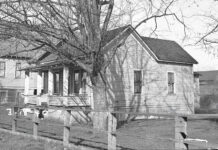
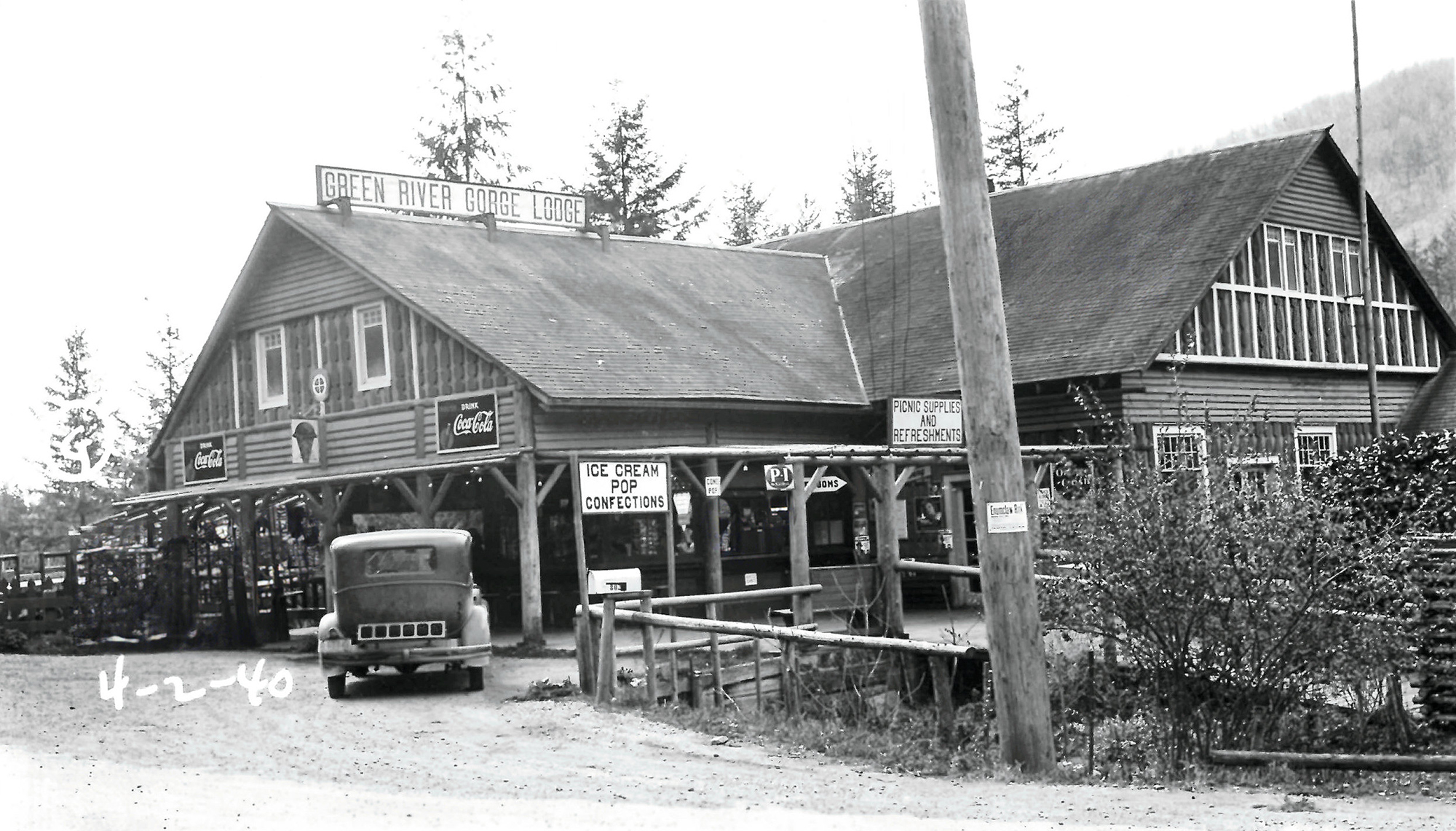
This replacement resort structure still stands adjacent to the Green River Gorge Bridge. Assessor records list the building size at 4,416 square feet. It was built by John and Mary Rudge in 1925, who advertised their facilities as Rudge’s Green River Gorge Resort. The Rudges also operated a gas station called Jack’s Place. South of the road on the east side of the GRG Bridge, William J. and Della Trethewey operated a competing resort with a main building, store, cabins, picnic tables, and an autocamp. Della Trethewey was a celebrated cook known for her fried chicken dinners.
The two resorts likely combined operations, perhaps in December 1944, when the Tretheweys were listed as fee owners of both. The property was sold to John V. Sullivan in 1950, then Henry H. and Mildred (Janes) Munro in June 1954. R.S. Quinille purchased it sometime later. In 1977, Jim and Linda Carter acquired the Green River Gorge Lodge and surrounding properties. Next week, more about the Green River Gorge in the Jim and Linda Carter era.
This photo dated April 2, 1940, comes courtesy of the Puget Sound Regional Archives, custodian of the King County Assessor records. Photo enhancements were performed by Doug ‘Boomer’ Burnham, doing business as BoomersPhotography.com