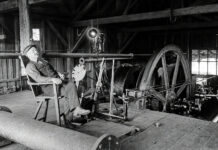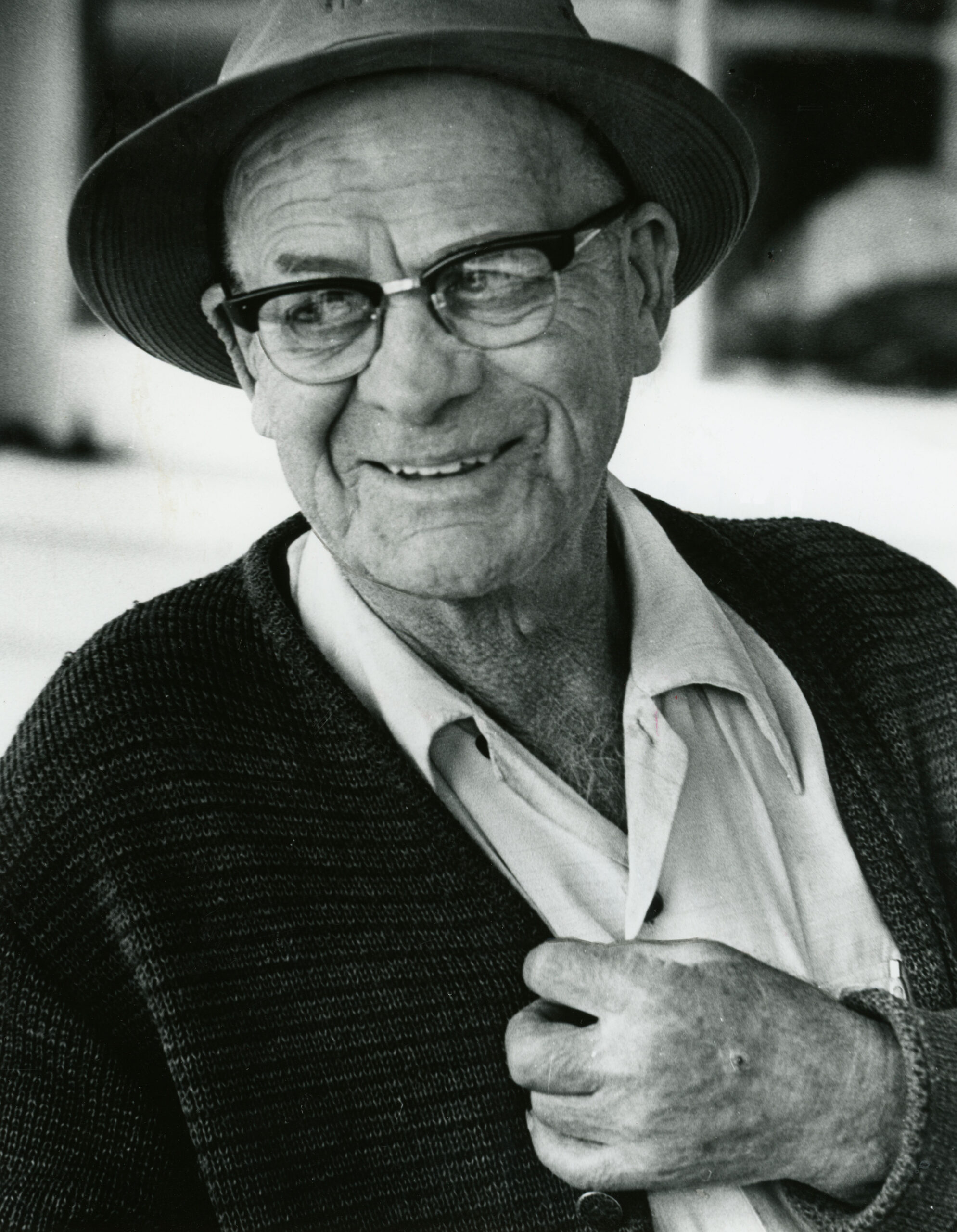
When this photo of Tom Whitehouse Jr. was taken in late July 1968, he was completing an interview with the Tacoma News Tribune. The reporter, Charles Rice, referred to Whitehouse as the unofficial mayor of Kanaskat. It wasn’t a surprising honorific applied for the 73-year-old Whitehouse, who was born there in a log cabin in 1895. He lived most of his life in Palmer-Kanaskat, a landscape dominated by railroads and the Green River. Whitehouse was also the third generation of his family to live in the area, following his father, Tom Sr., and grandfather, George Whitehouse. To that title of Mayor, Whitehouse replied, “If I am, it’s because I have trouble with everybody.”
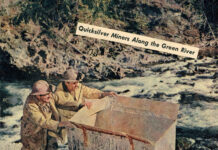
The real explanation for Tom Whitehouse’s good reputation was his character. At age 14, Tom found work in the coal mines around Cumberland and Black Diamond, an occupation shared by father and grandfather. In 1917, Whitehouse joined the Army and served as a corporal during World War I, where he was hospitalized after exposure to poison gas on the Western Front.
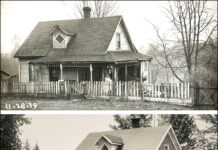
After the war, Tom returned to Kanaskat, married Katie Such, and built a new home just 30 feet north of the concrete bridge that crosses the Green River. The couple operated a grocery store and a two-pump gas station from their home. That bridge on the Cumberland-Kanaskat Road was one of the main river crossings, bringing miners, loggers, fishermen, and travelers. In the early years, Tom worked in the Selleck lumber mill by day, while Katie manned the gas station and store. In time, they established an auto-camp behind their home, where visitors and tourists could park their cars, pitch a tent, and spend the night on the banks of the Green River with a swimming hole below.
But all this was first made possible in 1885, when the Northern Pacific built its transcontinental rail line through Stampede Pass, down the Green River, and through Enumclaw on its way to Tacoma. Palmer was the original telegraph station located south of the river. Kanaskat, north of the river, changed dramatically after 1900 when Northern Pacific built a new rail line––the Palmer Cut-off–– which ran west through Ravensdale and Covington to Auburn. N.P. also constructed an ornate stationhouse, new rail facilities, and housing for workers in Kanaskat.
Tom’s grandfather, George Whitehouse, a pioneer who came west by covered wagon, was among the first to settle in the area, farther up the Green River between Maywood and Lester. A June 1902, forest fire threatened his forested holdings. Due to changes in federal timberland policies, George Whitehouse exchanged his upriver lands for property in Kanaskat. In a 1976 interview, Tom claimed, “My father’s homestead up the river at Maywood was stolen by the timber companies after Teddy Roosevelt sold out to timber interests.”
George’s son, Tom Whitehouse Sr., left Iowa and followed his father west to southeast King County, where mining was booming, with mines in nearby Durham, Bayne, Kangley, and later Ravensdale. Tom Sr. and Sarah Whitehouse were the parents of Tom Jr. All three Whitehouses–– George, Tom Sr., and Tom Jr.–– worked in coal mines. Young Tom started when he was 14.
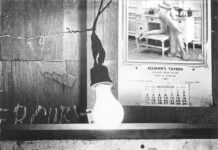
After Prohibition ended in 1933, Whitehouse opened a room in his home that also served as a grocery store and called it a tavern. A dozen years later, he purchased the Lavender Town schoolhouse for $600. The building was previously used by children of Japanese workers at the Selleck Mill to attend Japanese-language school on Wednesday and Saturday mornings. The Japanese student’s regular school was in Selleck, where many became friends with children from the surrounding towns of Kangley, Elk Coal, Durham, and Hiawatha. Tom moved the Japanese schoolhouse, complete with its stone fireplace, to Kanaskat. Known as the Green River Tavern, Whitehouse sold the business in 1952, and a decade later or so it burned down, after which a new version was constructed.
By the mid-1950s, Tom Whitehouse Jr. had assembled over 100 acres of property, which he slowly sold off over the years. The popular Kanaskat-Palmer Recreation Area and State Park camping facilities are built on property once owned by Whitehouse. Tom Jr. and Katie had two children, Allen Whitehouse and Joanne (Whitehouse) Cerne, plus five grandchildren, Vicki (Whitehouse) Coutts, Cindy (Whitehouse) Strom, Rick Garland, Joe Cerne, and Tom Cerne. In May 1971, Tom and Katie (Such) Whitehouse celebrated their 50th wedding anniversary with 150 well-wishers, as Frank Cerne played organ and accordion to the appreciative assemblage. Today, Joe Cerne and his wife, Bridgett, live in the grocery-store home Tom Whitehouse built in the early 1920s.
Much of the research for this column came from Tom Cerne, who, like his grandfather, great-grandfather, and great-great-grandfather, worked for a short time at a Black Diamond coal mine, picking table, sorting coal from rock and shale. Tom Cerne is a librarian for the Federal Way School District. This image number TNT0078K by photographer Warren Peterson comes courtesy of the Tacoma Public Library Northwest Room, and originally appeared in an August 4, 1968, Tacoma News Tribune article titled, “Down the Road a Piece.”